Friday, March 24, 2006
Requiem
God loved so much he gave his only-begotten Son; we love so little we give not even the benefit of the doubt.


Thursday, March 23, 2006
A Wandering Aramean...
Pilgrims long remember, I think, what settlers soon forget.
Settlers imagine that good fences make good neighbors, that “their” property is theirs and private. Pilgrims, on the other hand, know that shared hope, a common vision, and the pooling of resources make for real community. If settlers imagine that they are self-sufficient, that their own strength and wisdom have gotten them this far, pilgrims know they must continually rely on each other, and on the daily provision of God, to get them anywhere at all. Rich fools build barns; thankful pilgrims build altars.
I have been thinking since Sunday about such things, and what started it was this: our Church School class was temporarily displaced. Some weeks ago, so that God’s Kids could have a permanent home (we were happy to make the sacrifice!), we moved from the old Wesley class to the Fellowship Hall. But on this past Sunday the UMW had set-up for that delicious lunch (and let us be clear: we were happy about that too! Yum!), and so we were left looking for a place to pray and study. The sanctuary? No. Debs was practicing. The choir room? No, that room would be occupied soon enough. My office? Too small. And so, if you saw about 20 people kind of wandering around in the halls of the building, a bit bewildered, it was we—the Wesley Class.
Not to be too melodramatic or presumptuous, but I think we had—at least let me say I had, if only a little and just for a moment—the slightest inkling of how Palestinians and many homeless others feel. It was good for us—at least let me say it was good for me—in that little way to walk a few little steps in the shoes of refugees.
We finally found a place (the Promised Land!) and, settled in, began talking about our poor lost world and what we might do about it—bringing people to Christ, bringing Christ to the world. It is a big question, of course, with many answers, but I am thinking that one crucial thing we can do for the homeless, broken and warring world is to build a safe place, a healing place, a “home” place where people can find refuge and peace. A place where people can bring their darkness into God’s light—a place where death gives way to life, where confession is practiced, where forgiveness is sure. The kingdom of God is like a bush, Jesus said, where the birds of the air can build nests: the church is like a shelter, a way station, a safe house, a hospital.
I suggested that one of the reasons many churches have trouble bringing people to Christ is that the churches themselves do not look or behave so very different from the rest of world. That to say, many churches are just as fractious, just as territorial, just as prejudiced and privatized as any other group of “settlers”—and very clear as to who the “homefolk” are and who are the strangers. That kind of stratification may be attractive to the gentry, but Jesus built his church on the foundation of fishermen and the feckless, tax collectors and revolutionaries.
I reached back for a phrase I wrote about in this space some months ago, now—and suggested that for our church to grow, to be more of what we want to be and in some ways already see, we need to be “Jesus to each other and Christ for the world.” That definition of church comes from the pen of Robert Benson and would make for a great tee shirt, or mission statement, or program strategy: we will be Jesus to each other—calling, teaching, reminding, rebuking if need be and always forgiving; and we will be Christ for the world—inviting, welcoming, sharing, feeding, baptizing and instructing. Jesus for each other and Christ for the world, and always remembering the lessons we learned when we were “on the road,” when we had no place till we came to this place, relying only on each other and the daily provision of God, building our altars in thanks.
Settlers imagine that good fences make good neighbors, that “their” property is theirs and private. Pilgrims, on the other hand, know that shared hope, a common vision, and the pooling of resources make for real community. If settlers imagine that they are self-sufficient, that their own strength and wisdom have gotten them this far, pilgrims know they must continually rely on each other, and on the daily provision of God, to get them anywhere at all. Rich fools build barns; thankful pilgrims build altars.
I have been thinking since Sunday about such things, and what started it was this: our Church School class was temporarily displaced. Some weeks ago, so that God’s Kids could have a permanent home (we were happy to make the sacrifice!), we moved from the old Wesley class to the Fellowship Hall. But on this past Sunday the UMW had set-up for that delicious lunch (and let us be clear: we were happy about that too! Yum!), and so we were left looking for a place to pray and study. The sanctuary? No. Debs was practicing. The choir room? No, that room would be occupied soon enough. My office? Too small. And so, if you saw about 20 people kind of wandering around in the halls of the building, a bit bewildered, it was we—the Wesley Class.
Not to be too melodramatic or presumptuous, but I think we had—at least let me say I had, if only a little and just for a moment—the slightest inkling of how Palestinians and many homeless others feel. It was good for us—at least let me say it was good for me—in that little way to walk a few little steps in the shoes of refugees.
We finally found a place (the Promised Land!) and, settled in, began talking about our poor lost world and what we might do about it—bringing people to Christ, bringing Christ to the world. It is a big question, of course, with many answers, but I am thinking that one crucial thing we can do for the homeless, broken and warring world is to build a safe place, a healing place, a “home” place where people can find refuge and peace. A place where people can bring their darkness into God’s light—a place where death gives way to life, where confession is practiced, where forgiveness is sure. The kingdom of God is like a bush, Jesus said, where the birds of the air can build nests: the church is like a shelter, a way station, a safe house, a hospital.
I suggested that one of the reasons many churches have trouble bringing people to Christ is that the churches themselves do not look or behave so very different from the rest of world. That to say, many churches are just as fractious, just as territorial, just as prejudiced and privatized as any other group of “settlers”—and very clear as to who the “homefolk” are and who are the strangers. That kind of stratification may be attractive to the gentry, but Jesus built his church on the foundation of fishermen and the feckless, tax collectors and revolutionaries.
I reached back for a phrase I wrote about in this space some months ago, now—and suggested that for our church to grow, to be more of what we want to be and in some ways already see, we need to be “Jesus to each other and Christ for the world.” That definition of church comes from the pen of Robert Benson and would make for a great tee shirt, or mission statement, or program strategy: we will be Jesus to each other—calling, teaching, reminding, rebuking if need be and always forgiving; and we will be Christ for the world—inviting, welcoming, sharing, feeding, baptizing and instructing. Jesus for each other and Christ for the world, and always remembering the lessons we learned when we were “on the road,” when we had no place till we came to this place, relying only on each other and the daily provision of God, building our altars in thanks.
Wednesday, March 22, 2006
A Lenten Meditation on Galatians 5:15
Long ago I heard a summation—a post-mortem, actually—of the Nixon Administration. It came at the end of a lengthy documentary highlighting the rise and fall of the Nixon White House. The last clip on the screen was that famous shot of the disgraced president waving goodbye from the steps of his helicopter. A somber voice-over opined that, in the end, Nixon’s Administration “was characterized by grand vision and petty grievance.”
By “grand vision” the journalist meant that in terms of foreign policy Nixon and his aides could see what the rest of us then couldn’t. They had a global perspective on commerce and security which, though radical in those days, we now take pretty much for granted. The trip to China—a move unparalleled in American and perhaps world politics—helped open wide the doors to that whole side of the world.
But there was also “petty grievance,” by which the journalist suggested that Nixon and his aides viewed domestic policy through a lens of “enemies list” paranoia and “micro-worry.” They “saw” loyal political dissent and idealistic college protest as part of a great and dangerous conspiracy arrayed against them. A basic mistrust of the American people, the media and the democratic process prompted Nixon and his aides to engineer and then cover-up all the various break-ins and dirty tricks.
“Grand vision and petty grievance,” and in the long-run it is not hard to imagine that the pettiness is what we remember best and will. Why? Perhaps because the “grand vision” eventually became mainstream common sense—the way everyone looks at things—and it is hard to remember to give Mr. Nixon the credit he deserves. Conversely, the break-ins and dirty tricks defied all sense then and still do, even as they remain a unique paragraph in modern presidential history: the absolute cause of his abbreviated term in office.
As the voice-over ended the helicopter was disappearing over the trees, ferrying Mr. Nixon into political exile. The picture faded to gray and then to black.
I offer that not as partisan political commentary, but simply to suggest that churches and ministries can be ruined by the same ironic bipolarity suggested by the documentary. We Christians are indeed possessed of a grand vision, see what the unbelieving world can’t but will: all people at peace in the presence of God. Jesus calls us into God’s once and future work of peace-making—we have been entrusted with the “ministry and message of reconciliation,” Paul says, “God making his appeal to the world through us.” And it is our essential domestic unity—our living, growing fellowship of real forgiveness and spiritual friendship (the unity for which Jesus prayed)—which testifies to God’s peaceful plan for all his children. The peace of God begins with us who share the peace of Christ.
How tragic then when that grand vision for the world is betrayed or even destroyed by petty grievance at home. When Christ’s chosen do not choose to forgive one another, or bless one another, trust one another or speak the truth in love… when we compile, as it were, enemies lists or ransack the reputations of our brothers and sisters on account of jealousies and grudges and personal agendas… then we should not be surprised if our work is cut short and our pettiness all anyone can seem to remember as we fade to gray and then to black.
By “grand vision” the journalist meant that in terms of foreign policy Nixon and his aides could see what the rest of us then couldn’t. They had a global perspective on commerce and security which, though radical in those days, we now take pretty much for granted. The trip to China—a move unparalleled in American and perhaps world politics—helped open wide the doors to that whole side of the world.
But there was also “petty grievance,” by which the journalist suggested that Nixon and his aides viewed domestic policy through a lens of “enemies list” paranoia and “micro-worry.” They “saw” loyal political dissent and idealistic college protest as part of a great and dangerous conspiracy arrayed against them. A basic mistrust of the American people, the media and the democratic process prompted Nixon and his aides to engineer and then cover-up all the various break-ins and dirty tricks.
“Grand vision and petty grievance,” and in the long-run it is not hard to imagine that the pettiness is what we remember best and will. Why? Perhaps because the “grand vision” eventually became mainstream common sense—the way everyone looks at things—and it is hard to remember to give Mr. Nixon the credit he deserves. Conversely, the break-ins and dirty tricks defied all sense then and still do, even as they remain a unique paragraph in modern presidential history: the absolute cause of his abbreviated term in office.
As the voice-over ended the helicopter was disappearing over the trees, ferrying Mr. Nixon into political exile. The picture faded to gray and then to black.
I offer that not as partisan political commentary, but simply to suggest that churches and ministries can be ruined by the same ironic bipolarity suggested by the documentary. We Christians are indeed possessed of a grand vision, see what the unbelieving world can’t but will: all people at peace in the presence of God. Jesus calls us into God’s once and future work of peace-making—we have been entrusted with the “ministry and message of reconciliation,” Paul says, “God making his appeal to the world through us.” And it is our essential domestic unity—our living, growing fellowship of real forgiveness and spiritual friendship (the unity for which Jesus prayed)—which testifies to God’s peaceful plan for all his children. The peace of God begins with us who share the peace of Christ.
How tragic then when that grand vision for the world is betrayed or even destroyed by petty grievance at home. When Christ’s chosen do not choose to forgive one another, or bless one another, trust one another or speak the truth in love… when we compile, as it were, enemies lists or ransack the reputations of our brothers and sisters on account of jealousies and grudges and personal agendas… then we should not be surprised if our work is cut short and our pettiness all anyone can seem to remember as we fade to gray and then to black.
Wednesday, March 01, 2006
Spring Cleaning
Lent is upon us, a time for spiritual spring cleaning. Today I imposed ashes on the foreheads of some fifty Stanley saints, and there were many other such services in and around these precints today.
I have no way of knowing, exactly, what all of those who were "imoposed" did immediately afterwards--here or anywhere else--but I am guessing that some of the faithful went to the nearest lavatory and washed-off the smudge. They were on their way to work or the Y; they had to go to the store of the school and they did not want to draw attention to themselves or what they had been doing beforehand. Who can blame them? I know from experience, and some of it today's, that going into the gas station, say, or the Hardee's with a black cross on your brow is a sure way to draw stares and smirks.
Those who practice today's discipline should be careful, then--for if it is a bit of cowardice to remove so quickly the sign of the season, it can be pride to wear it too long or to obviously. Or for the wrong reasons.
Jesus said, "Beware of practicing your piety before others in order to be seen by them..." which is not the same thing as if Jesus had said, "Beware of practicing your piety before others at all." Jesus seems to want us to practice our piety, to prove our faith, either by taking up a cross or taking down an idol or speaking a word of testimony when we are called to account for the faith that is in us (see also I Peter 3). No, the point is why we do what we do... as a performance for others, or as a demonstration to God.
Years ago, my dad served a small Baptist congregation in Milton, TN, a town so small even God may not have known where it was. First Sunday night of every month, those gathered had "business meeting" before singing and preaching began. It was a poor congregation, in a poor part of rural Tennessee, but for about four months running one man would stand up in the service, pull the corner of a $100 bill out of his pocket and declare, "I have $100 here that I will give to the church if another person will match it," and then he would sit down, smugly, because no one had taken up the challenge. He was smug before hand, too, confident in his challenge--he surely knew no one else in the church had a C-note. Dad put up with this about as long as he could. One night, before business meeting, he gathered some of the other men in the hall, all of them as sick of this charade as Dad, and they pooled their resources to collect, barely, $100. That night when the fellow stood up and showed his...uh...corner, Dad said, "Done! Seven of us have come up with money to match yours." The man, of course, immediately backed down, said that the challenge was for one other person to match it and therefore he was rescinding the offer.
The man seemed uninterested in reward other than that of having his poor neighbors know he was a bit richer than they. His pledge of support for the church was bogus, a ploy--not for love of God or his work but for love of self, or so it seemed to the rest of us.
John Baillie says that, sometimes at least, our care of others is a refined form of self-care. Jesus says that our acts of piety, if we are not careful, have little to do with the honor we want to do God and everything to do with the honor we want others to do us. Lent could be one of the times when we do that.
I encourage my people to wear their ashes all day, Ash Wednesday. I encourage them to wear a cross necklace--not jewelry--for the days of Lent. To practice their piety, to prove to themselvse and God they can make testimony in an increasingly pagan culture--but to beware lest they are doing it not in order to be saying something about God but to say something about themselves, or to have others say it for them. Lest, in other words, they too quickly receive their reward.
I have no way of knowing, exactly, what all of those who were "imoposed" did immediately afterwards--here or anywhere else--but I am guessing that some of the faithful went to the nearest lavatory and washed-off the smudge. They were on their way to work or the Y; they had to go to the store of the school and they did not want to draw attention to themselves or what they had been doing beforehand. Who can blame them? I know from experience, and some of it today's, that going into the gas station, say, or the Hardee's with a black cross on your brow is a sure way to draw stares and smirks.
Those who practice today's discipline should be careful, then--for if it is a bit of cowardice to remove so quickly the sign of the season, it can be pride to wear it too long or to obviously. Or for the wrong reasons.
Jesus said, "Beware of practicing your piety before others in order to be seen by them..." which is not the same thing as if Jesus had said, "Beware of practicing your piety before others at all." Jesus seems to want us to practice our piety, to prove our faith, either by taking up a cross or taking down an idol or speaking a word of testimony when we are called to account for the faith that is in us (see also I Peter 3). No, the point is why we do what we do... as a performance for others, or as a demonstration to God.
Years ago, my dad served a small Baptist congregation in Milton, TN, a town so small even God may not have known where it was. First Sunday night of every month, those gathered had "business meeting" before singing and preaching began. It was a poor congregation, in a poor part of rural Tennessee, but for about four months running one man would stand up in the service, pull the corner of a $100 bill out of his pocket and declare, "I have $100 here that I will give to the church if another person will match it," and then he would sit down, smugly, because no one had taken up the challenge. He was smug before hand, too, confident in his challenge--he surely knew no one else in the church had a C-note. Dad put up with this about as long as he could. One night, before business meeting, he gathered some of the other men in the hall, all of them as sick of this charade as Dad, and they pooled their resources to collect, barely, $100. That night when the fellow stood up and showed his...uh...corner, Dad said, "Done! Seven of us have come up with money to match yours." The man, of course, immediately backed down, said that the challenge was for one other person to match it and therefore he was rescinding the offer.
The man seemed uninterested in reward other than that of having his poor neighbors know he was a bit richer than they. His pledge of support for the church was bogus, a ploy--not for love of God or his work but for love of self, or so it seemed to the rest of us.
John Baillie says that, sometimes at least, our care of others is a refined form of self-care. Jesus says that our acts of piety, if we are not careful, have little to do with the honor we want to do God and everything to do with the honor we want others to do us. Lent could be one of the times when we do that.
I encourage my people to wear their ashes all day, Ash Wednesday. I encourage them to wear a cross necklace--not jewelry--for the days of Lent. To practice their piety, to prove to themselvse and God they can make testimony in an increasingly pagan culture--but to beware lest they are doing it not in order to be saying something about God but to say something about themselves, or to have others say it for them. Lest, in other words, they too quickly receive their reward.
Thursday, January 19, 2006
Monday with Esta
The other day I went to see Esta in the hospital. She told me I could tell you.
She fell last Saturday and broke her hip. She had surgery on Sunday afternoon and as I write this she is scheduled to leave the hospital on tomorrow to begin her rehab. But I wanted to tell you about this visit.
The other times I went, there were family and friends and not much time for conversation (not to mention the sedatives and pain medication). But on Monday, after the nurse who checked her blood pressure left, it was just she and I. The first words out of her mouth when she saw me come through the door were not “Hello, preacher” or “Hi, Tom,” but —and I am not making this up—“You don’t know how much I miss coming to church! I miss it! I miss it so much!” When I took my leave a little while later, she didn’t say “Bye, Tom” or “Thanks for coming,” but “I miss it, oh, I miss it so.”
In between we talked a little about her situation, her fall and surgery. She frowned to tell me that she was in “right much” pain. When the physical therapist interrupted us to tell her he was coming back in a little while to get her up again and make her walk some more, she frowned more deeply still. When he left she laid her head back on the pillow, looked straight at the ceiling and, after a moment, into the past. “I used to teach Sunday School,” she said. “I taught so many lessons.” A wide grin closed her eyes. “It made such a difference in those little ones’ lives,” she smiled.
“And in yours, too,” I replied. She did not look at me but nodded. She said something about Easter Egg hunts and mumbled a word or two about her own Sunday School class. A tear fell from my eye as she said, once more but still smiling, “I miss it so much.”
“I know you do,” I said; “I would too. Church is the only thing I know anything about,” I said truthfully. She looked back at me and nodded. I said, “But what a great thing that you and I have so many good memories of church. Isn’t it wonderful to love and enjoy something so much that it hurts to be away from it?” She nodded again. A few minutes later I got up to leave and she said… well, you know what she said. Nor will I forget it.
My prayer that day and every day since is this: if I outlive my body, when what has held me up has given way and I am prone, I hope I can look up and remember as much as Esta does. I hope that memories of faith, hope and love—memories of Jesus and the church—will bring a smile back to my frowning face, and keep on doing so, till there are frowns and tears and pain no more.
She fell last Saturday and broke her hip. She had surgery on Sunday afternoon and as I write this she is scheduled to leave the hospital on tomorrow to begin her rehab. But I wanted to tell you about this visit.
The other times I went, there were family and friends and not much time for conversation (not to mention the sedatives and pain medication). But on Monday, after the nurse who checked her blood pressure left, it was just she and I. The first words out of her mouth when she saw me come through the door were not “Hello, preacher” or “Hi, Tom,” but —and I am not making this up—“You don’t know how much I miss coming to church! I miss it! I miss it so much!” When I took my leave a little while later, she didn’t say “Bye, Tom” or “Thanks for coming,” but “I miss it, oh, I miss it so.”
In between we talked a little about her situation, her fall and surgery. She frowned to tell me that she was in “right much” pain. When the physical therapist interrupted us to tell her he was coming back in a little while to get her up again and make her walk some more, she frowned more deeply still. When he left she laid her head back on the pillow, looked straight at the ceiling and, after a moment, into the past. “I used to teach Sunday School,” she said. “I taught so many lessons.” A wide grin closed her eyes. “It made such a difference in those little ones’ lives,” she smiled.
“And in yours, too,” I replied. She did not look at me but nodded. She said something about Easter Egg hunts and mumbled a word or two about her own Sunday School class. A tear fell from my eye as she said, once more but still smiling, “I miss it so much.”
“I know you do,” I said; “I would too. Church is the only thing I know anything about,” I said truthfully. She looked back at me and nodded. I said, “But what a great thing that you and I have so many good memories of church. Isn’t it wonderful to love and enjoy something so much that it hurts to be away from it?” She nodded again. A few minutes later I got up to leave and she said… well, you know what she said. Nor will I forget it.
My prayer that day and every day since is this: if I outlive my body, when what has held me up has given way and I am prone, I hope I can look up and remember as much as Esta does. I hope that memories of faith, hope and love—memories of Jesus and the church—will bring a smile back to my frowning face, and keep on doing so, till there are frowns and tears and pain no more.
Wednesday, January 11, 2006
Pass the Bamboo
Since last we talked I have turned 51. I mention this fact not to solicit cards or felicitations, but only to share with you a pretty funny line sent me by my friend Mike, a pastor buddy from college and seminary days. A bit of background: Mike fell off the same chronological precipice as I back in September and the other day we were commiserating a bit by email, eventually confessing one to the other—and surprisingly, we each of us acknowledged—how this birthday had hit us a harder lick than last.
We are not vain, for the most part. Not fatalists or despairing. We were just stewing a bit, I guess you’d say, in a watery broth of cyber-melancholy with a pinch of age-related funk.
And yes, I know: birthdays are just dates; years are just numbers; you are only as old as you feel. And no, 51 is not all that old—not old at all they way some people see it. All I can say is that Mike and I were feeling pretty old the day we were talking about it. “I have lost 30 yards off my drive,” Mike lamented but, really, he didn’t have that much to lose (as I reminded him, one good friend to another). “I can’t remember the half of what I read,” I countered, “you know, like I could when we were in seminary.” He replied, “You didn’t read half of what you were supposed to, and still don’t, from the sound of it” (Mike rereads Tolkien every year; also, he is also a stickler about grammar). “It’s these new bifocals,” I protested. “I can’t see.” He wrote back, “I know what you mean.” Both of us have new glasses and are, therefore, blind as bats.
As a matter of course, we compared our various aches and pains, and not all of them orthopedic, either. Some of the pains we spoke of were a little closer to the heart: regrets, missteps, lost opportunities, unraveled friendships—that kind of thing. It was not serious therapy, by any means, or even deep wallowing; more the kind of discussion old friends have now and then when their paths have diverged radically and the years have passed all too quickly.
And then Mike said something to save the day. He recalled how the night before he was in his favorite chair, disheveled, feet up, diet coke in hand, chin on chest and more or less asleep as he “watched the game.” He started snoring, which woke him in time to hear one of his kids crack on the old man’s posture and general appearance. Mike roused up to inform the upstart that he, Mike, had “achieved the status of a head gorilla, which means I get sit around in the shade, eat what I want, develop a paunch, sleep a great deal, and act a little surly from time to time, all without undue guilt.” King Kong, in other words, just more domesticated.
That to say, if age has its ravages it also has its privileges. (Note to Staff-Parish Committee: if ever you get a complaint about me beating my chest and baring my teeth, bellowing and tossing books here and there, you will know what happened.)
We are not vain, for the most part. Not fatalists or despairing. We were just stewing a bit, I guess you’d say, in a watery broth of cyber-melancholy with a pinch of age-related funk.
And yes, I know: birthdays are just dates; years are just numbers; you are only as old as you feel. And no, 51 is not all that old—not old at all they way some people see it. All I can say is that Mike and I were feeling pretty old the day we were talking about it. “I have lost 30 yards off my drive,” Mike lamented but, really, he didn’t have that much to lose (as I reminded him, one good friend to another). “I can’t remember the half of what I read,” I countered, “you know, like I could when we were in seminary.” He replied, “You didn’t read half of what you were supposed to, and still don’t, from the sound of it” (Mike rereads Tolkien every year; also, he is also a stickler about grammar). “It’s these new bifocals,” I protested. “I can’t see.” He wrote back, “I know what you mean.” Both of us have new glasses and are, therefore, blind as bats.
As a matter of course, we compared our various aches and pains, and not all of them orthopedic, either. Some of the pains we spoke of were a little closer to the heart: regrets, missteps, lost opportunities, unraveled friendships—that kind of thing. It was not serious therapy, by any means, or even deep wallowing; more the kind of discussion old friends have now and then when their paths have diverged radically and the years have passed all too quickly.
And then Mike said something to save the day. He recalled how the night before he was in his favorite chair, disheveled, feet up, diet coke in hand, chin on chest and more or less asleep as he “watched the game.” He started snoring, which woke him in time to hear one of his kids crack on the old man’s posture and general appearance. Mike roused up to inform the upstart that he, Mike, had “achieved the status of a head gorilla, which means I get sit around in the shade, eat what I want, develop a paunch, sleep a great deal, and act a little surly from time to time, all without undue guilt.” King Kong, in other words, just more domesticated.
That to say, if age has its ravages it also has its privileges. (Note to Staff-Parish Committee: if ever you get a complaint about me beating my chest and baring my teeth, bellowing and tossing books here and there, you will know what happened.)
Wednesday, December 21, 2005
Plenty Good Room
In Latin American countries, and particularly in Mexico, a series of special worship services prepare Christians for Christmas. The services are called Las Posadas, and they recall the Holy Family’s search for shelter in Bethlehem. For eight nights, at the homes of members who have agreed to host the service, and then again on Christmas Eve, at the church, a small band of worshipers come to the closed front door and says:
“Who will give lodging to these pilgrims
who are weary of traveling the roads?
We have come exhausted from Nazareth.
I am a carpenter, by the name of Joseph.
In the name of the heavens, I beg you for lodging,
my beloved wife can no longer travel.”
Inside the doors are other worshipers who respond:
“Although you tell us you are weary,
we do not give lodging to strangers.
We don’t care what your name is; let us sleep.
We are telling you that we will not let you enter.”
Then follows a sort of call and response where Scriptures are read and heard, reminding the worshipers that opening doors is a hallmark of our faith—whether to family and friends, or even to strangers and enemies. We open our doors in honor of the One against whom many doors were closed. At the end of Las Posadas, when the homes and church have been opened at last, there are prayers and carols and then, of course, refreshments.
Would to God that it worked in everyday life the way it does in that service: that with only a few words back and forth, a few reminders of what we believe and preach, all the doors could open—that we could find more room in the Inn of our homes and hearts, our churches and lives. Would to God that our work of hospitality proceeded so sweetly: that after a little prayer and preparation we could sing, have cookies and all would be as it should be. Sadly, Gospel-work is most often messier than that, has been from the start.
“The Word became flesh,” John says (which means there was pain and blood and tears), “and dwelt among us,” and where Christ’s Holy Flesh first dwelt was in the unlit darkness of a Bethlehem cave, the limb-numbing cold of a Bethlehem night, there among smelly animals and all the smelly things stabled animals do. It was not a pristine moment, though the Hallmark cards would like it to be, and there would be few pristine moments to come. At the end, too, there was pain and blood and tears, which is to say that if the Word taking on Mary’s flesh was an untidy business, the Gospel taking on our flesh is also an untidy business—but thanks be to God not an unprecedented one. Perhaps next year we will do Las Posadas, but with such experience as to make the call and response a kind of testimony, and the cookies taste really sweet.
“Who will give lodging to these pilgrims
who are weary of traveling the roads?
We have come exhausted from Nazareth.
I am a carpenter, by the name of Joseph.
In the name of the heavens, I beg you for lodging,
my beloved wife can no longer travel.”
Inside the doors are other worshipers who respond:
“Although you tell us you are weary,
we do not give lodging to strangers.
We don’t care what your name is; let us sleep.
We are telling you that we will not let you enter.”
Then follows a sort of call and response where Scriptures are read and heard, reminding the worshipers that opening doors is a hallmark of our faith—whether to family and friends, or even to strangers and enemies. We open our doors in honor of the One against whom many doors were closed. At the end of Las Posadas, when the homes and church have been opened at last, there are prayers and carols and then, of course, refreshments.
Would to God that it worked in everyday life the way it does in that service: that with only a few words back and forth, a few reminders of what we believe and preach, all the doors could open—that we could find more room in the Inn of our homes and hearts, our churches and lives. Would to God that our work of hospitality proceeded so sweetly: that after a little prayer and preparation we could sing, have cookies and all would be as it should be. Sadly, Gospel-work is most often messier than that, has been from the start.
“The Word became flesh,” John says (which means there was pain and blood and tears), “and dwelt among us,” and where Christ’s Holy Flesh first dwelt was in the unlit darkness of a Bethlehem cave, the limb-numbing cold of a Bethlehem night, there among smelly animals and all the smelly things stabled animals do. It was not a pristine moment, though the Hallmark cards would like it to be, and there would be few pristine moments to come. At the end, too, there was pain and blood and tears, which is to say that if the Word taking on Mary’s flesh was an untidy business, the Gospel taking on our flesh is also an untidy business—but thanks be to God not an unprecedented one. Perhaps next year we will do Las Posadas, but with such experience as to make the call and response a kind of testimony, and the cookies taste really sweet.
Wednesday, November 30, 2005
Majesty and Mess
On Sunday morning, just after shaking hands and kissing cheeks in the narthex following the service, I walked back down the center aisle of the sanctuary toward the pulpit to gather my things. As I did, I passed one group of three, standing in a circle and talking about this or that, and another group of four, likewise engaged. There were singletons, too, and couplets, lingering, retrieving their stuff, smiling, the most of them. Casually, I glanced down into the pews and saw that on the cushions here and there were bulletins, hymnals, attendance slips and a candy-wrapper or two. Someone had left an umbrella.
I looked up again and saw in the sanctuary all the colors and signs of the Advent season: greens and reds, blues and violets. There was the beautiful tree and the more beautiful chrismons; there was the Advent wreath, hanging from the ceiling; there was a slight aroma of oil—and suddenly in my mind the vivid recollection of a young family of three (about to be four!) reading ancient scriptures of God’s promises and, then, kindling a new flame of our abiding hopes and expectations—God’s Word enfleshed before our very eyes.
I had mentioned in my sermon that as a season Advent is, as it were, two-eyed. There are mixed messages here: hope and fear, praise and lament, testimony and confession. God does his best work in a barn, where amidst fodder and ordure the sweet Savior is born.
Our church itself proclaims the mystery of the season! Look up, and you will see how beautifully decorated our church is season by season. Look down, and you will see plenty of evidence as to how thoroughly used our church is week by week. Our facility offers us (and the community) both beauty and utility, both majesty and mess, both loveliness and life. That, my friends, is precisely as it should be.
I am so very thankful that our church gives evidence of traffic, of use, of busyness and activity. I am just as thankful that our church is lovely, worshipful, and awe-inspiring. All that to say, I hope we never feel the need to choose, either in this building or the next, for one characteristic over against the other, for a building both beautiful and used is blessing to all who enter it.
I looked up again and saw in the sanctuary all the colors and signs of the Advent season: greens and reds, blues and violets. There was the beautiful tree and the more beautiful chrismons; there was the Advent wreath, hanging from the ceiling; there was a slight aroma of oil—and suddenly in my mind the vivid recollection of a young family of three (about to be four!) reading ancient scriptures of God’s promises and, then, kindling a new flame of our abiding hopes and expectations—God’s Word enfleshed before our very eyes.
I had mentioned in my sermon that as a season Advent is, as it were, two-eyed. There are mixed messages here: hope and fear, praise and lament, testimony and confession. God does his best work in a barn, where amidst fodder and ordure the sweet Savior is born.
Our church itself proclaims the mystery of the season! Look up, and you will see how beautifully decorated our church is season by season. Look down, and you will see plenty of evidence as to how thoroughly used our church is week by week. Our facility offers us (and the community) both beauty and utility, both majesty and mess, both loveliness and life. That, my friends, is precisely as it should be.
I am so very thankful that our church gives evidence of traffic, of use, of busyness and activity. I am just as thankful that our church is lovely, worshipful, and awe-inspiring. All that to say, I hope we never feel the need to choose, either in this building or the next, for one characteristic over against the other, for a building both beautiful and used is blessing to all who enter it.
Tuesday, November 08, 2005
On the Sacraments
“A Service of Word and Table”: look at the first few pages of the United Methodist Hymnal and you will see that “Word and Table” is the basic “shape” of our worship. We see this shape most clearly on first Sundays when in a single morning we both hear a sermon and celebrate the Lord’s Supper. Still, that two-fold designation describes more than our liturgy; indeed, it is the very “rhythm” of our life together as Christians. That to say, we gather ourselves around the Word of God in preaching and teaching, there to learn of our duty in the world; and we come to the Table (and Font) to receive the grace God dispenses there to strengthen us in doing that duty.
In some other traditions, Baptism and the Lord’s Supper are considered gestures of the faithful toward God. That is, one is baptized and receives the bread and juice as voluntary acts of obedience and remembrance. When new believers profess their faith, they signify their new commitment to God through baptism; the baptized gather together on occasion to remember the sacrifice of Jesus and eat the memorial Meal. In our United Methodist tradition, however (and indeed in most major branches of the Church), Baptism and the Lord’s Supper are deemed Sacraments: gestures of God toward us. The water of Baptism conveys God’s commitment to us, to make us holy. In the Meal, God gives us spiritual food, strength to do our holy work in the world.
In the Bible, “holy” means set apart. Nothing more and, by grace, nothing less. “Holy” does not mean faultless or perfect. No, to be holy is to be commissioned, marked, designated. God’s grace in Baptism sets apart to be Christ’s ambassadors in a pagan and idolatrous world. We receive the Body and Blood of Jesus to strengthen us for selfless service in a self-seeking and manipulative society. In each Sacrament we take what God gives us so that we might give ourselves to others. In sum, the Sacraments are channels of God’s grace to us to make us channels of God’s grace to the world.
Stanley Hauerwas, an ethicist at Duke, suggests that the Church does its most distinctive and “radical” work when it does those things which, really, are the most “normal” and routine things we do: when we preach Christ crucified (a stumbling block to those who imagine life only in terms of acquisition and success); and when we dispense and receive the Sacraments (eat Holy Food and take Holy Baths) and thereby accept that we are set apart and strengthened, come what may, to be ambassadors for Christ, God making his appeal through us.
In some other traditions, Baptism and the Lord’s Supper are considered gestures of the faithful toward God. That is, one is baptized and receives the bread and juice as voluntary acts of obedience and remembrance. When new believers profess their faith, they signify their new commitment to God through baptism; the baptized gather together on occasion to remember the sacrifice of Jesus and eat the memorial Meal. In our United Methodist tradition, however (and indeed in most major branches of the Church), Baptism and the Lord’s Supper are deemed Sacraments: gestures of God toward us. The water of Baptism conveys God’s commitment to us, to make us holy. In the Meal, God gives us spiritual food, strength to do our holy work in the world.
In the Bible, “holy” means set apart. Nothing more and, by grace, nothing less. “Holy” does not mean faultless or perfect. No, to be holy is to be commissioned, marked, designated. God’s grace in Baptism sets apart to be Christ’s ambassadors in a pagan and idolatrous world. We receive the Body and Blood of Jesus to strengthen us for selfless service in a self-seeking and manipulative society. In each Sacrament we take what God gives us so that we might give ourselves to others. In sum, the Sacraments are channels of God’s grace to us to make us channels of God’s grace to the world.
Stanley Hauerwas, an ethicist at Duke, suggests that the Church does its most distinctive and “radical” work when it does those things which, really, are the most “normal” and routine things we do: when we preach Christ crucified (a stumbling block to those who imagine life only in terms of acquisition and success); and when we dispense and receive the Sacraments (eat Holy Food and take Holy Baths) and thereby accept that we are set apart and strengthened, come what may, to be ambassadors for Christ, God making his appeal through us.
False Alternatives
I am perplexed by the fact that we United Methodists seem unable to “hold the bridge” between the various diads of our tradition. In both cathedral and campmeeting our faithfulness was once characterized by rationality and piety, the Sacraments and preaching, liturgy and revival (by heart-religion and works, too). John Wesley himself both preached and incarnated these multiple dimensions of the catholic, orthodox, and reformed faith to which he was heir. Somehow, though, his spiritual descendants have, in a word, bisected that comprehensive message. These days we seem to strive to be rational or pious, sacramental or evangelical, revivalistic or liturgical (even lay-led or sacerdotal).
In sum, I fear that on the one hand we are more Anglican than Wesleyan, and on the other more “baptist” than Methodist. That is not to say there is anything inherently wrong with either Anglicans or Baptists; only that our tradition is distinctive. Moreover, there seems to exist on the part of some of our preachers (and members and teachers, too) a willingness to embrace and advance a particular aspect of our catholic heritage at the expense of the other(s), and in a way which Mr. Wesley himself would have been unwilling to do.
That to say, when in the crossfire of competing allegiances congregations have felt forced to “market” themselves to consumerist seekers, in many cases they have done so by means of a partitive representation of our tradition. The net result is the emergence of incomplete images, false alternatives, of what it means to be United Methodist.
Still there must be a way to reclaim the synthesis advocated by the early Methodist movement and in doing-so reinvigorate our congregations and denomination, and at the same time also lead unchurched seekers to the abundant life of faith in Jesus Christ in its communal fullness. Qualified observers tell us that postmoderns eagerly seek historic spiritual traditions while at the same time rejecting merely denominational paradigms. It would seem to me that an authentic Wesleyan model of corporate life and ministry might be just the kind of balanced diet this starving generation needs. That is, our historic emphasis on both faith and works, prayer and study, Sacrament and sermon, the form of religion and its power—as well as our emphasis on the worth of laity and clergy—might prove most fulfilling.
Relatedly, there is emerging in our day a new model of ministry, cooperative and complementary, which honors both the priesthood (or ministry) of all Christians as well as the particular representative ministries of Word, Sacrament and Order. This model is called “equipping ministries” and its goal is to help the laity discover and put to powerful use their Spirit-giftedness. At base this new paradigm is merely the reclaiming of the New Testament pattern of pneumatic rather than institutional credentialing and suggests the kind of “interactive” ministry which would be attractive to postmodern sensibilities. “Equipping ministries is an exciting form of evangelism and discipling which both reclaims the Wesleyan synthesis and at the same time rejects, or at least corrects, the popular and false alternatives.
In sum, I fear that on the one hand we are more Anglican than Wesleyan, and on the other more “baptist” than Methodist. That is not to say there is anything inherently wrong with either Anglicans or Baptists; only that our tradition is distinctive. Moreover, there seems to exist on the part of some of our preachers (and members and teachers, too) a willingness to embrace and advance a particular aspect of our catholic heritage at the expense of the other(s), and in a way which Mr. Wesley himself would have been unwilling to do.
That to say, when in the crossfire of competing allegiances congregations have felt forced to “market” themselves to consumerist seekers, in many cases they have done so by means of a partitive representation of our tradition. The net result is the emergence of incomplete images, false alternatives, of what it means to be United Methodist.
Still there must be a way to reclaim the synthesis advocated by the early Methodist movement and in doing-so reinvigorate our congregations and denomination, and at the same time also lead unchurched seekers to the abundant life of faith in Jesus Christ in its communal fullness. Qualified observers tell us that postmoderns eagerly seek historic spiritual traditions while at the same time rejecting merely denominational paradigms. It would seem to me that an authentic Wesleyan model of corporate life and ministry might be just the kind of balanced diet this starving generation needs. That is, our historic emphasis on both faith and works, prayer and study, Sacrament and sermon, the form of religion and its power—as well as our emphasis on the worth of laity and clergy—might prove most fulfilling.
Relatedly, there is emerging in our day a new model of ministry, cooperative and complementary, which honors both the priesthood (or ministry) of all Christians as well as the particular representative ministries of Word, Sacrament and Order. This model is called “equipping ministries” and its goal is to help the laity discover and put to powerful use their Spirit-giftedness. At base this new paradigm is merely the reclaiming of the New Testament pattern of pneumatic rather than institutional credentialing and suggests the kind of “interactive” ministry which would be attractive to postmodern sensibilities. “Equipping ministries is an exciting form of evangelism and discipling which both reclaims the Wesleyan synthesis and at the same time rejects, or at least corrects, the popular and false alternatives.
Wednesday, August 24, 2005
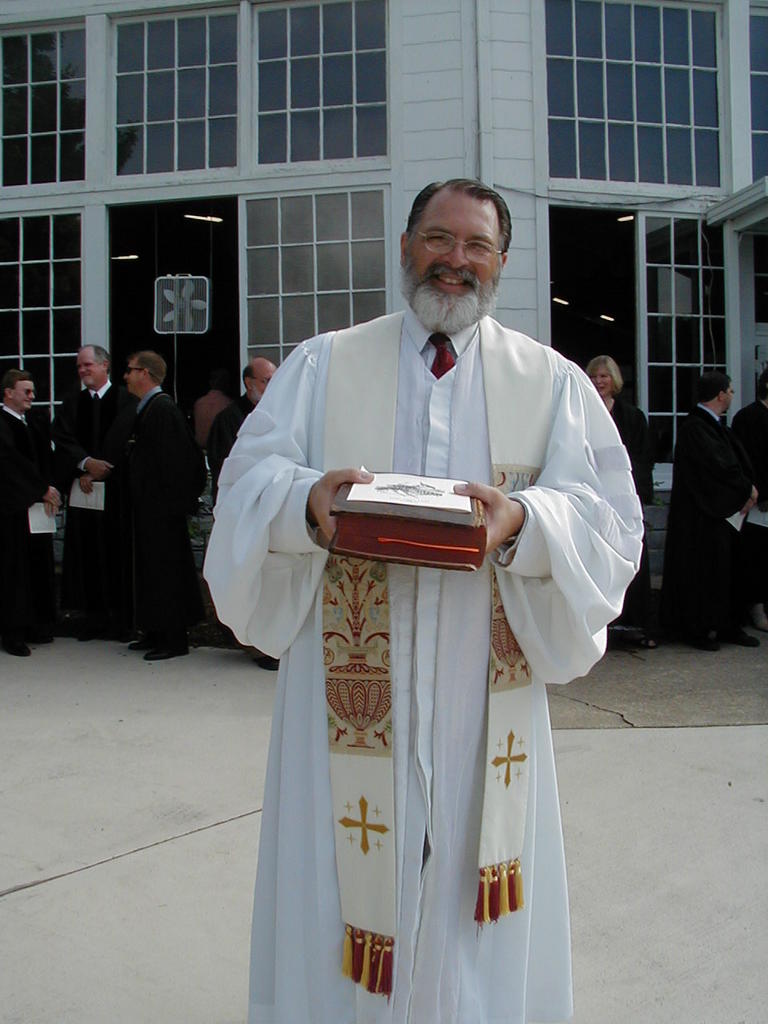
Keys of the Kingdom
In the twelfth chapter of St. Paul’s letter to the church at Rome, he writes: “Do not think of yourselves more highly than you ought,” and that is solid spiritual advice for all of us, of course, but if I had been the Apostle’s secretary I might have worked this into the final draft: “but do not think of yourselves less highly than you ought, either.”
Either attitude grieves the Holy Spirit, I think, and both perspectives are rife within the Church. Pride is the more obvious sin, but self-deprecation is if anything more consequential because it is an insult to the Holy Spirit, the Giver of gifts. Each of us and all of us—that to say, as individuals and as a congregation—have been graced with spiritual gifts. These gifts are the tools which enable us to obey the Great Commandment. Remember how Jesus says, “Love the Lord your God with all your heart, soul, strength and mind, and your neighbor as yourself?” The gifts of the spirit—faith, preaching, teaching, service, encouragement, generosity, caring, hospitality (see Romans 12:6ff)—empower us to be obey Jesus’ command.
Recently, I have begun to muse on these “gifts of the Spirit” (Paul offers another list of them in I Corinthians 12:4ff, and describes the evidence of their presence among us in Galatians 5:22ff) by means of another New Testament metaphor: “the keys of the Kingdom.” What can unlock the door to the church’s future? What can seal-away the powers of darkness? What are the keys to faithfulness and growth, life and health? The gifts of the spirit: preaching, teaching, serving, encouragement, generosity, caring, hospitality. These are the keys given to us to open the door to our church’s future.
Our common confession, our congregational profession of faith, our corporate praise (with the disciples at Caesarea Philippi we all say of Jesus and sing, “Thou art the Christ, the Son of the Living God!”)—that is the ring which holds the keys, and the keys are every lock’s undoing. We go to the ring, we find the right key, we unlock the door.
“Think with sober judgment,” Paul says again in Romans 12. At least part of that thinking is to remember that together we are commissioned, and individually we are each one of us cut in a unique way—think of each church member as a key on the ring—to fit a particular circumstance or ministry, whether to unlock the whole pantries of grace or to entomb the powers of hatred and death.
Either attitude grieves the Holy Spirit, I think, and both perspectives are rife within the Church. Pride is the more obvious sin, but self-deprecation is if anything more consequential because it is an insult to the Holy Spirit, the Giver of gifts. Each of us and all of us—that to say, as individuals and as a congregation—have been graced with spiritual gifts. These gifts are the tools which enable us to obey the Great Commandment. Remember how Jesus says, “Love the Lord your God with all your heart, soul, strength and mind, and your neighbor as yourself?” The gifts of the spirit—faith, preaching, teaching, service, encouragement, generosity, caring, hospitality (see Romans 12:6ff)—empower us to be obey Jesus’ command.
Recently, I have begun to muse on these “gifts of the Spirit” (Paul offers another list of them in I Corinthians 12:4ff, and describes the evidence of their presence among us in Galatians 5:22ff) by means of another New Testament metaphor: “the keys of the Kingdom.” What can unlock the door to the church’s future? What can seal-away the powers of darkness? What are the keys to faithfulness and growth, life and health? The gifts of the spirit: preaching, teaching, serving, encouragement, generosity, caring, hospitality. These are the keys given to us to open the door to our church’s future.
Our common confession, our congregational profession of faith, our corporate praise (with the disciples at Caesarea Philippi we all say of Jesus and sing, “Thou art the Christ, the Son of the Living God!”)—that is the ring which holds the keys, and the keys are every lock’s undoing. We go to the ring, we find the right key, we unlock the door.
“Think with sober judgment,” Paul says again in Romans 12. At least part of that thinking is to remember that together we are commissioned, and individually we are each one of us cut in a unique way—think of each church member as a key on the ring—to fit a particular circumstance or ministry, whether to unlock the whole pantries of grace or to entomb the powers of hatred and death.
Wednesday, July 20, 2005
I Come to the Garden...
I know next to nothing about gardening, which is both sad and somewhat dangerous given the beautiful roses beside the parsonage. Some of you have marveled at the four bushes and their blooms: yellow, white, red, and a lovely hybrid, more orange than peach with red tips and highlights (it looks almost good enough to eat for breakfast!)
Anyway, Jo and I have enjoyed both seeing the roses and cutting them now and then to fill a vase indoors, and truth to tell it feels to us kind of “suburban” or something to be living in a house with rose bushes. We did have a large gardenia in Marshville, right outside the kitchen window, and its fragrant flowers thrilled my late mother-in-law while she lived with us. Flowers and fragrances—two of God’s good gifts.
The other day, though, I noticed that the roses did not look quite right. They were paler than usual and there were holes in the petals. I thought at first maybe they were just getting old and tired but when I looked closer I saw these…these green creatures…down deep between the petals. Turns out there were Japanese beetles, lots of them, feasting on the roses and, soon enough, killing them. What had been lovely and delicate flowers were reduced to barren nubs on the ends of dry stems.
I have done battle with these “flora-vores” the last couple of weeks, buying the chemicals at Lowe’s and spraying the bushes—die, beetles, die!—and the roses themselves are doing their best to keep growing in spite of the attacks, but sometimes the battle seems futile. The green enemy is plentiful and sneaky, undetectable apart from daily vigilance and doing well what it does naturally—feasting on beauty, killing God’s good gifts. And it is a parable, really, what is going on beside the parsonage.
Sin, gossip, blame, mercilessness—there are these and many other creatures ever at work in the garden of God’s church. Only daily vigilance—and by that I mean real prayer and genuine forgiveness, praise and thanksgiving—can keep them from destroying God’s good and beautiful gifts.
Anyway, Jo and I have enjoyed both seeing the roses and cutting them now and then to fill a vase indoors, and truth to tell it feels to us kind of “suburban” or something to be living in a house with rose bushes. We did have a large gardenia in Marshville, right outside the kitchen window, and its fragrant flowers thrilled my late mother-in-law while she lived with us. Flowers and fragrances—two of God’s good gifts.
The other day, though, I noticed that the roses did not look quite right. They were paler than usual and there were holes in the petals. I thought at first maybe they were just getting old and tired but when I looked closer I saw these…these green creatures…down deep between the petals. Turns out there were Japanese beetles, lots of them, feasting on the roses and, soon enough, killing them. What had been lovely and delicate flowers were reduced to barren nubs on the ends of dry stems.
I have done battle with these “flora-vores” the last couple of weeks, buying the chemicals at Lowe’s and spraying the bushes—die, beetles, die!—and the roses themselves are doing their best to keep growing in spite of the attacks, but sometimes the battle seems futile. The green enemy is plentiful and sneaky, undetectable apart from daily vigilance and doing well what it does naturally—feasting on beauty, killing God’s good gifts. And it is a parable, really, what is going on beside the parsonage.
Sin, gossip, blame, mercilessness—there are these and many other creatures ever at work in the garden of God’s church. Only daily vigilance—and by that I mean real prayer and genuine forgiveness, praise and thanksgiving—can keep them from destroying God’s good and beautiful gifts.
Friday, July 15, 2005
an unintentional message
I have just begun serving a new church--First United Methodist, in Stanley, NC--and just down the road from our present facility on Main Street is property we own, 93 acres of it and, we hope, the expanse for a long-dreamed of expansion. We still do most of our work on Main Street, but we make use of the "property," too--there is a youth soccer league, an annual rodeo, a walking track--and most every month (though we are thinking about cutting back to once a quarter) there is a "singing." Now, in some places, a church-sponsored singing is kind of like a hymn-fest or revival, with lots of call and response and audience participation. When we say "singin'" we mean a concert and so we gather out there at the property with our lawn chairs to listen to gospel groups who give us their best work and sell their CD's. We have a concession stand, too, and the smell of grilled hot dogs and hamburgers seeds the southern gospel breeze coming from the stage. Pretty much fun.
There is a sign out there on the property which announces upcoming events, and this last month someone got to playing with it. The sign was supposed to read, "1st United Methodist Church," only the letters got pushed and pulled a little and how it came to read was: "1 Stunited Methodist church," which to my eye as I drove past looked for all the world like, "1 stunted methodist church."
I laughed out loud, but please, God, save us from being a stunted methodist church!
There is a sign out there on the property which announces upcoming events, and this last month someone got to playing with it. The sign was supposed to read, "1st United Methodist Church," only the letters got pushed and pulled a little and how it came to read was: "1 Stunited Methodist church," which to my eye as I drove past looked for all the world like, "1 stunted methodist church."
I laughed out loud, but please, God, save us from being a stunted methodist church!
Monday, May 02, 2005
so much easier
T. S. Eliot once said something to the effect that as a species, we humans cannot bear too much reality. Perhaps that explains our fascination with sports, movies and all things diverting: those things allow us to take our minds off other things. After all, it is hard to be grieved over the hungry when we are on the treadmill trying to flatten our own stomachs. It is tough to give over-much thought to the homeless when we are engrossed in March Madness and fiddling with the reception on the plasma-screen TV. Who will hear that the bell tolls for us when we suppose the only battles being fought are far away?
And who really wants to be a peacemaker? Probably not those with stock in CNN or Fox. War is big business and prime-time entertainment: if we but objectify, politicize and trivialize the most horrible aspects of life, we only prove Eliot’s point. We turn our griefs into bad jokes, our tragedies into B-movies, our foibles and fetishes into sitcoms and talk shows—St. Paul must have had afternoon TV in mind when he said that we glory in our shame. Or, if you are like Simon on Idol, you glory in another’s shame.
All that to say that, as Americans we do not deal with reality as much as we gloss it, buff it, package it and sell it. A night in front of the Zenith is nothing more than a stroll through the carnival’s midway as hucksters—we call them announcers—invite us to this amazing sideshow or that: Come see the freaks and the crazies! Come watch a man eat unhatched gooney-bird eggs and a woman get in a coffin with a thousand live snakes! Watch folk face their deepest fears, even if their fears are staged and hyped and hokum.
Reality TV is anything but, but there are others with their hands in this cookie jar.
In fact, Eliot’s insight interprets a large segment of our economy. Think for a second: How many businesses (and late-night infomercials!) hope to lure you and your money with a promise of protection from the “realities” of life? Insurance? Cosmetics? Health care? How many industries offer an “escape” from those same realities? Sports? Entertainment? Travel and resorts? Even TV religion, sad to say—prosperity preachers.
We avoid reality the best we can, most of us, and if that explains why some folk love TV religion, it also explains why others avoid the real thing. Faith is a matter of life and death and the deepest realities of human experience. And it is just so much easier to wonder what movies are opening, where we will eat, or who won last night’s game.
And who really wants to be a peacemaker? Probably not those with stock in CNN or Fox. War is big business and prime-time entertainment: if we but objectify, politicize and trivialize the most horrible aspects of life, we only prove Eliot’s point. We turn our griefs into bad jokes, our tragedies into B-movies, our foibles and fetishes into sitcoms and talk shows—St. Paul must have had afternoon TV in mind when he said that we glory in our shame. Or, if you are like Simon on Idol, you glory in another’s shame.
All that to say that, as Americans we do not deal with reality as much as we gloss it, buff it, package it and sell it. A night in front of the Zenith is nothing more than a stroll through the carnival’s midway as hucksters—we call them announcers—invite us to this amazing sideshow or that: Come see the freaks and the crazies! Come watch a man eat unhatched gooney-bird eggs and a woman get in a coffin with a thousand live snakes! Watch folk face their deepest fears, even if their fears are staged and hyped and hokum.
Reality TV is anything but, but there are others with their hands in this cookie jar.
In fact, Eliot’s insight interprets a large segment of our economy. Think for a second: How many businesses (and late-night infomercials!) hope to lure you and your money with a promise of protection from the “realities” of life? Insurance? Cosmetics? Health care? How many industries offer an “escape” from those same realities? Sports? Entertainment? Travel and resorts? Even TV religion, sad to say—prosperity preachers.
We avoid reality the best we can, most of us, and if that explains why some folk love TV religion, it also explains why others avoid the real thing. Faith is a matter of life and death and the deepest realities of human experience. And it is just so much easier to wonder what movies are opening, where we will eat, or who won last night’s game.
Tuesday, April 12, 2005
popes and hopes
Like most everyone else, I suppose, I was pretty taken by the pomp and formality of last week’s ceremonies in Vatican City. We do not often see the pageantry of a papal funeral. Last time, in 1978, I was in seminary. Pope John Paul (as he was called then) had succeeded Pope Paul VI in August. He sat in St. Peter’s chair for all of thirty-three days before he up and died. John Paul was not an old man by any means, and I remember there being lots of rumors that he was poisoned or otherwise murdered, perhaps for fear he was too “liberal” on such matters as contraception in developing countries, or too honest in the face of alleged institutional corruption at the Vatican Bank. (See, The Godfather, III)
For my part, I was just sad. He seemed a genuine and genuinely funny man, always smiling and self-deprecating, too. Upon his election, he is said to have blessed the College of Cardinals with these words, “May God forgive you what you have done on my behalf.” A day or two before his death he told a small boy, a young pilgrim, that when he was little he had always had trouble with math. You gotta love that in a pope.
Within about a month we saw two papal funerals—one Paul VI and one for John Paul—but that was long years ago. John Paul II, elected in the “year of three popes,” was the only pope many of the world’s Catholics, or lots of others, had ever known.
They laid John Paul II in all his finery, for all the world to see. He had on the gold miter, the red outer robes, the white inner robes. He had on red socks and stiff shoes, He lay a bit crooked, his head cocked slightly to the side (arthritis and Parkinsons had made a lasting impression on him). Still, he was recognizable. No doubt who that was.
As I watched the unending lines of people pass him by, as I watched dignitaries kneel near his body, I thought to myself that it is an easy thing to recognize a dead pope. The evidence is obvious—the clothes, the hat, the Swiss Guard. Dead popes are easy to spot, and even for non-Catholics. Even for strangers.
Harder to identify is the living Christ, who is so much among his poor, suffering children that he is not always recognized—even by those who claim him. “Lord, when did we see you?” “You saw me in the hungry, the helpless, the suffering,” Jesus says.
One might only wish we and the world were as eager to find and follow the living Christ as we obviously are to gaze at the dead Vicar. God rest his soul; and God stir ours.
For my part, I was just sad. He seemed a genuine and genuinely funny man, always smiling and self-deprecating, too. Upon his election, he is said to have blessed the College of Cardinals with these words, “May God forgive you what you have done on my behalf.” A day or two before his death he told a small boy, a young pilgrim, that when he was little he had always had trouble with math. You gotta love that in a pope.
Within about a month we saw two papal funerals—one Paul VI and one for John Paul—but that was long years ago. John Paul II, elected in the “year of three popes,” was the only pope many of the world’s Catholics, or lots of others, had ever known.
They laid John Paul II in all his finery, for all the world to see. He had on the gold miter, the red outer robes, the white inner robes. He had on red socks and stiff shoes, He lay a bit crooked, his head cocked slightly to the side (arthritis and Parkinsons had made a lasting impression on him). Still, he was recognizable. No doubt who that was.
As I watched the unending lines of people pass him by, as I watched dignitaries kneel near his body, I thought to myself that it is an easy thing to recognize a dead pope. The evidence is obvious—the clothes, the hat, the Swiss Guard. Dead popes are easy to spot, and even for non-Catholics. Even for strangers.
Harder to identify is the living Christ, who is so much among his poor, suffering children that he is not always recognized—even by those who claim him. “Lord, when did we see you?” “You saw me in the hungry, the helpless, the suffering,” Jesus says.
One might only wish we and the world were as eager to find and follow the living Christ as we obviously are to gaze at the dead Vicar. God rest his soul; and God stir ours.
Sunday, April 03, 2005
In the Breaking of Bread
It is Easter afternoon, and two of Jesus’ disciples were on their way to Emmaus, a little village just outside Jerusalem. Why? No one knows for sure. Was it home for one of them or both? Or was it just a place, some other place than the place they had been these last few days.
It is Easter afternoon and Jesus himself draws near the two who are on their way to Emmaus, but their eyes were kept from recognizing him. Why? No one knows for sure. Maybe the light was too bright. Maybe when your expectations are too much behind you cannot see ahead, or the side. When grief is too intense, maybe you don’t look up.
It is Easter afternoon and they do not recognize him, but for the next little while he walks with them and he talks with them and he interprets to them all the things in the the scriptures about himself. And then they get to the village and it appears he will leave them, will go on his way past Emmaus. Why? No one knows for sure. Maybe because now that Jesus is raised, resurrected, he is no longer bound to time or place or even previous relationships. He is free to go and do and form new friendships.
But then, when he about to go, they beg him to stay. They say, “The day is spent, the night is coming, please stay with us.” And so he does. Why? No one knows for sure, but maybe Jesus does not want his friends and followers to face the night alone.
When he was at the Table with them, Jesus took the bread, as he had taken it that Last night, and he broke the bread, and suddenly they remembered. They recognized. They rejoiced. And then he was gone again. Why? No one knows for sure, but this much is certain: Jesus is always on the move. Disciples have to follow him.
When Jesus leaves, so do they. They head back to Jerusalem to find the other disciples and tell them that Jesus had appeared to them in the breaking of bread. Being at the Table with Jesus began to bring them all together again.
The crucifixion was centrifugal for those whose loved Jesus. The force of his death dispersed them, drove them away from each other. But the Table was and remains centripetal for those who love and follow Jesus. The meal brings us together, keeps bringing us back together.
It is Easter afternoon and Jesus himself draws near the two who are on their way to Emmaus, but their eyes were kept from recognizing him. Why? No one knows for sure. Maybe the light was too bright. Maybe when your expectations are too much behind you cannot see ahead, or the side. When grief is too intense, maybe you don’t look up.
It is Easter afternoon and they do not recognize him, but for the next little while he walks with them and he talks with them and he interprets to them all the things in the the scriptures about himself. And then they get to the village and it appears he will leave them, will go on his way past Emmaus. Why? No one knows for sure. Maybe because now that Jesus is raised, resurrected, he is no longer bound to time or place or even previous relationships. He is free to go and do and form new friendships.
But then, when he about to go, they beg him to stay. They say, “The day is spent, the night is coming, please stay with us.” And so he does. Why? No one knows for sure, but maybe Jesus does not want his friends and followers to face the night alone.
When he was at the Table with them, Jesus took the bread, as he had taken it that Last night, and he broke the bread, and suddenly they remembered. They recognized. They rejoiced. And then he was gone again. Why? No one knows for sure, but this much is certain: Jesus is always on the move. Disciples have to follow him.
When Jesus leaves, so do they. They head back to Jerusalem to find the other disciples and tell them that Jesus had appeared to them in the breaking of bread. Being at the Table with Jesus began to bring them all together again.
The crucifixion was centrifugal for those whose loved Jesus. The force of his death dispersed them, drove them away from each other. But the Table was and remains centripetal for those who love and follow Jesus. The meal brings us together, keeps bringing us back together.
Tuesday, March 15, 2005
Poor Lazarus
Has anyone asked Lazarus whether he wants to be raised from the dead? I think that if I'm Lazarus, I'm pretty annoyed that Jesus calls me back from the grave. And not only because, now, I have to die again (and maybe violently this time since the Pharisees are so aggravated at Jesus and how people are believing in him that they plan to kill the both of us to put a stop to it).
To put it in my terms: back from the grave my knees hurt again. I am deaf as a post and I forget things I used to know. Who wants to come back to a world where a man shoots a judge and is proud of it, where another man shoots the family of a judge, where yet another man doesn't like the sermon and so he kills the preacher, the preacher's son, five others and then himself, where a good Lutheran layman turns out maybe to have been a notorious and brutal serial killer? There are suicide bombers, wars and rumors of wars, and four days into eternity I am already beginning to enjoy the heavenly choirs and the feeling, finally, of peace. If I am Lazarus I want to stay where I am--no more pain, no more tears, no more whiney, reactive sisters, no more politicians or generals or TV preachers. Let me stay dead.
But Jesus, my friend, has called me back. And so I go. I obey him because I love him. And if this is where he wants me, back in the middle of the mess, then heaven can wait a while longer and I will follow his voice and go where he wants me to go and do what he wants me to do even though it sure ain't heaven.
In John’s account of the gospel, the story of Lazarus serves as the ironic hinge to the whole narrative. That is, Jesus gives life to Lazarus and by doing so insures his own death. The story here is a matter of death and life—that is what happens to Lazarus—but also a matter of life and death—that is what will soon happen to Jesus.
But it also seems to me to be a parable of sorts, too. That for now anyway Jesus will not let his friends, those who love him and are loved by him, remain too long in the throes of eternity before calling them back to the real world. They may have a mountaintop experience, as on the Mount of Transfiguration, or they may see a glimpse of heaven, as Lazarus did; they may want to build booths and stay there, one way or the other, but Jesus keeps calling them back to where he is, to where there is sadness and anger and disappointment and prayer.
He keeps calling us back to where there is death that we might bear witness to life, and he keeps calling us in our lives to be unafraid of death or life. He calls to us to come forth, which is to say, to go forth, into the world where we know how people feel, and we know what they need, and we like Jesus are agitated and groan sometimes at all we see, but Jesus our friend keeps calling us back. Right back into the world to be with him. And if this is where he wants us, for now, then heaven can wait a little while longer and until then we will go and do, and go and do, just because he calls us.
To put it in my terms: back from the grave my knees hurt again. I am deaf as a post and I forget things I used to know. Who wants to come back to a world where a man shoots a judge and is proud of it, where another man shoots the family of a judge, where yet another man doesn't like the sermon and so he kills the preacher, the preacher's son, five others and then himself, where a good Lutheran layman turns out maybe to have been a notorious and brutal serial killer? There are suicide bombers, wars and rumors of wars, and four days into eternity I am already beginning to enjoy the heavenly choirs and the feeling, finally, of peace. If I am Lazarus I want to stay where I am--no more pain, no more tears, no more whiney, reactive sisters, no more politicians or generals or TV preachers. Let me stay dead.
But Jesus, my friend, has called me back. And so I go. I obey him because I love him. And if this is where he wants me, back in the middle of the mess, then heaven can wait a while longer and I will follow his voice and go where he wants me to go and do what he wants me to do even though it sure ain't heaven.
In John’s account of the gospel, the story of Lazarus serves as the ironic hinge to the whole narrative. That is, Jesus gives life to Lazarus and by doing so insures his own death. The story here is a matter of death and life—that is what happens to Lazarus—but also a matter of life and death—that is what will soon happen to Jesus.
But it also seems to me to be a parable of sorts, too. That for now anyway Jesus will not let his friends, those who love him and are loved by him, remain too long in the throes of eternity before calling them back to the real world. They may have a mountaintop experience, as on the Mount of Transfiguration, or they may see a glimpse of heaven, as Lazarus did; they may want to build booths and stay there, one way or the other, but Jesus keeps calling them back to where he is, to where there is sadness and anger and disappointment and prayer.
He keeps calling us back to where there is death that we might bear witness to life, and he keeps calling us in our lives to be unafraid of death or life. He calls to us to come forth, which is to say, to go forth, into the world where we know how people feel, and we know what they need, and we like Jesus are agitated and groan sometimes at all we see, but Jesus our friend keeps calling us back. Right back into the world to be with him. And if this is where he wants us, for now, then heaven can wait a little while longer and until then we will go and do, and go and do, just because he calls us.
Thursday, March 10, 2005
Mr. Appleton and the Sacraments
Mr. Appleton was our phys-ed teacher in grammar school, lo, these many years ago. He was our first coach, only we didn’t call him coach—what we called him, actually, was “Crabby Appleton,” after the cartoon character some of you remember. And neither did we call what we did under his daily supervision “phys ed.” Some of us called that hour “Recess.” “Play period” is what I called it for the longest time. And maybe that was what made him crabby, that we referred to his class as “play period,” him a grown man and all with a college degree and everything.
Anyway, what I remember most about Mr. Appleton is this magnifying glass he carried around in his pocket, not very big; and not very often but some days he would take it out and invite an unwitting student over to watch it work. “Hold out your hand,” he’d say, and he’d take gentle hold, turn it palm-down. Then he would postition the glass between the child’s hand and...the sun... and at first a dime-sized spot of light would appear, but gradually Mr. Appleton would focus the spot. He’d move the glass up or down, and the spot would get smaller and brighter and smaller and brighter, until...OUCH! the child would squeal, and run away.
You probably couldn’t get by with that kind of thing these days, but that was a different era. And he wasn’t trying to hurt anyone, not really--I don’t think he was--but he taught us something. Or began to teach me something, anyway, that there are lenses which can catch the light which shines on us all the time, albeit diffused and easy to take for granted—certain kinds of lenses can gather the light and focus it into something narrower and more powerful—and more dangerous, really, depending on where you point the beam. On a dry day, I guess Mr. Appleton could have started a grass fire if he had wanted to. It was all of it sunlight, but through his magnifying glass it became a laser almost.
And thank you, Mr. Appleton, for giving me a picture of the Sacraments, because that’s exactly what these gestures are: God’s life-giving presence and love are all around us all the time, but these baths and meals are the ways in which that love gets focused and just as lasers can split rocks, the Sacraments can bust-up our hard heads, can light-up the darkness in our souls like a beacon, can set our hearts or the world on fire.
And it is wondrous to behold... Or dangerous, depending on your view.
Anyway, what I remember most about Mr. Appleton is this magnifying glass he carried around in his pocket, not very big; and not very often but some days he would take it out and invite an unwitting student over to watch it work. “Hold out your hand,” he’d say, and he’d take gentle hold, turn it palm-down. Then he would postition the glass between the child’s hand and...the sun... and at first a dime-sized spot of light would appear, but gradually Mr. Appleton would focus the spot. He’d move the glass up or down, and the spot would get smaller and brighter and smaller and brighter, until...OUCH! the child would squeal, and run away.
You probably couldn’t get by with that kind of thing these days, but that was a different era. And he wasn’t trying to hurt anyone, not really--I don’t think he was--but he taught us something. Or began to teach me something, anyway, that there are lenses which can catch the light which shines on us all the time, albeit diffused and easy to take for granted—certain kinds of lenses can gather the light and focus it into something narrower and more powerful—and more dangerous, really, depending on where you point the beam. On a dry day, I guess Mr. Appleton could have started a grass fire if he had wanted to. It was all of it sunlight, but through his magnifying glass it became a laser almost.
And thank you, Mr. Appleton, for giving me a picture of the Sacraments, because that’s exactly what these gestures are: God’s life-giving presence and love are all around us all the time, but these baths and meals are the ways in which that love gets focused and just as lasers can split rocks, the Sacraments can bust-up our hard heads, can light-up the darkness in our souls like a beacon, can set our hearts or the world on fire.
And it is wondrous to behold... Or dangerous, depending on your view.
Tuesday, March 08, 2005
A Homily: "A New Definition of Ministry"
Just then a lawyer stood up to test Jesus. “Teacher,” he said, “what must I do to inherit eternal life?” (Jesus) said to him, “What is written in the law? What do you read there?” (The lawyer) answered, “You shall love the Lord your God with all your heart, and with all your soul, and with all your strength, and with all your mind; and your neighbor as yourself.” And (Jesus) said to him, “You have given the right answer; do this, and you will live.”
But the lawyer, forgetting for a moment the test and sounding as if he really wanted to know, said, “But what if I do not love my self? How then shall I love my neighbor?”
That is not, of course, how the scripture reads in its final form. Luke reports instead that the lawyer asked the lawyerly question, “But who is my neighbor?” and Jesus then proceeded to tell the parable we call the Good Samaritan. But I have long thought and often said that there were other questions the lawyer might have asked in his conversation with Jesus.
How, for example, do I love the Lord my God with all my heart, soul, strength and mind? How might I even begin to love God in that totally self-giving way when I am so well practiced, day by day, at withholding the most of me in most situations? I hold back my affections and attentions, hold back my compassion and concern, keep the lid of my heart closed tight against my friends and family and God. I measure my words, and so what would it look like to give God unmeasured praise? I tithe my money but give God less than a tithe of the rest of me; what would it look like to give God even a tenth of my hopes and dreams, even a tenth of my fears and worries? How do I give God even a tenth of my thanks?
I do not admit to anyone when I am wrong, and sometimes, least of all to myself; what would it look like to made full confession to God and neighbor, really to love God and neighbor, our near neighbors and our far neighbors, our friends and our enemies—for me to love my enemy, for me to love my friends, for me to love the Lord my God with all my heart and soul and strength and mind… what would that look like? How could I do that? How could I even begin to do that? And if I started today, how long would it take until I had given him all of it? I kind of wish the lawyer had asked some of those questions…
Or this other question. What if I don’t love myself? You tell me to love my neighbor as myself, but what if I don’t love myself? What if I hate myself, or hate my life? What if I am so empty of anything that seems of worth—I mean, I may have much of the world’s goods, but so little of lasting goodness, so little of anything that matters. What I am full of is guilt and regret and shame, envy and greed and lust, and I hate that about me! Why am I like that?
What if I am bitter, years of grief and sorrow and disappointment?
What if the reason I judge so quickly the sins of others is because I see in them precisely what I despise in myself? What if my self-righteousness is really a form of self-loathing. My noble pretensions hiding something else again…
I go to the gym sometimes, and I work out and do the weights—am I doing that because I honor and treasure my body, and am trying to take care of it, or am I doing it because I despise the way I look in a looks-conscious era and am trying to meet another standard, that I can never meet because I am old and arthritic and gravity takes its toll, and I hate it that my youth is gone and my energy too, and I am so envious of the young ‘uns who looks so young and good and thin. Except they are immodest, too, half-dressed and "pull up your pants and put on a shirt!" I would say…
I have heard that depression is anger toward another person or situation turned inward. Perhaps, then, judgmentalism, prejudice, is self-loathing turned outward. I might not be afraid of someone taking my job if I had real confidence that I was doing so good a job it could not be taken away.
How do I love my neighbor when I do not love myself? And yes, yes, this is a twenty-first-century psychological reading of an ancient text, but the question is no less real for all of that. And I sometimes wonder if a lot of what ails us, in our relationship with others, is not really in others at all, but in ourselves. We direct against another person, another situation, the fear and self-loathing that are ours; never realizing that the fear and self-loathing are themselves sinful, contrary to the Gospel. Perfect love casts out fear, I John says, but day by day we would rather live with fear than live to become loving. We go on hating ourselves, and sometimes we are unaware—it goes unconfessed—when Jesus’ life and death prove how precious we are to God. He dies not only because we are sinful and self-directed and we will put out the light so that we can continue in darkness; he also dies because we are so precious to him that there is no pain he will not endure, no cross he will not bear, no price he will not pay to see us safe and saved at last.
How do I love my neighbor if I do not love myself? Well, in point of fact, the question is moot… John tells us that at the Last Supper Jesus gave us new instructions. A mandate, in fact, from which we derive the term Maundy, as in Thursday. On Maundy Thursday evening Jesus said, “A new commandment I give you, that you love one another. As I have loved you, so you ought also to love one another.”
We have to be Jesus to each other, in other words, and it does not matter how we feel about ourselves, only how we know Jesus to feel about us, and our friends and our enemies. Jesus loved us enough to die for us; should we not love one another enough at least enough to forgive one another? Jesus side was opened by Roman steel; should we not at least open our shut-up hearts to other in compassion? Jesus arms were stretched out on the cross; should we not at least love each other enough to embrace our neighbors? Jesus hands were nailed to hard wood; should we not at least unclench our fists?
We must be Jesus to each other… so we can be Christ for the world. Those words come from Robert Benson in his, "The Body Broken: Answering God's Call to Love One Another." He is talking about the ways we Christians and even entire denominations must get along among ourselves--love and forgive and celebrate one another--if we are to have a credible witness that the poor, fragmented world is to imagine that we have what they need. Just so. And what a wonderful new definition of ministry and mission: be Jesus to one another, be Christ for the world.
And really, the best answer to the lawyer's question. What must we do to have eternal life? Just this: Be Jesus to one another, be Christ for the world.
But the lawyer, forgetting for a moment the test and sounding as if he really wanted to know, said, “But what if I do not love my self? How then shall I love my neighbor?”
That is not, of course, how the scripture reads in its final form. Luke reports instead that the lawyer asked the lawyerly question, “But who is my neighbor?” and Jesus then proceeded to tell the parable we call the Good Samaritan. But I have long thought and often said that there were other questions the lawyer might have asked in his conversation with Jesus.
How, for example, do I love the Lord my God with all my heart, soul, strength and mind? How might I even begin to love God in that totally self-giving way when I am so well practiced, day by day, at withholding the most of me in most situations? I hold back my affections and attentions, hold back my compassion and concern, keep the lid of my heart closed tight against my friends and family and God. I measure my words, and so what would it look like to give God unmeasured praise? I tithe my money but give God less than a tithe of the rest of me; what would it look like to give God even a tenth of my hopes and dreams, even a tenth of my fears and worries? How do I give God even a tenth of my thanks?
I do not admit to anyone when I am wrong, and sometimes, least of all to myself; what would it look like to made full confession to God and neighbor, really to love God and neighbor, our near neighbors and our far neighbors, our friends and our enemies—for me to love my enemy, for me to love my friends, for me to love the Lord my God with all my heart and soul and strength and mind… what would that look like? How could I do that? How could I even begin to do that? And if I started today, how long would it take until I had given him all of it? I kind of wish the lawyer had asked some of those questions…
Or this other question. What if I don’t love myself? You tell me to love my neighbor as myself, but what if I don’t love myself? What if I hate myself, or hate my life? What if I am so empty of anything that seems of worth—I mean, I may have much of the world’s goods, but so little of lasting goodness, so little of anything that matters. What I am full of is guilt and regret and shame, envy and greed and lust, and I hate that about me! Why am I like that?
What if I am bitter, years of grief and sorrow and disappointment?
What if the reason I judge so quickly the sins of others is because I see in them precisely what I despise in myself? What if my self-righteousness is really a form of self-loathing. My noble pretensions hiding something else again…
I go to the gym sometimes, and I work out and do the weights—am I doing that because I honor and treasure my body, and am trying to take care of it, or am I doing it because I despise the way I look in a looks-conscious era and am trying to meet another standard, that I can never meet because I am old and arthritic and gravity takes its toll, and I hate it that my youth is gone and my energy too, and I am so envious of the young ‘uns who looks so young and good and thin. Except they are immodest, too, half-dressed and "pull up your pants and put on a shirt!" I would say…
I have heard that depression is anger toward another person or situation turned inward. Perhaps, then, judgmentalism, prejudice, is self-loathing turned outward. I might not be afraid of someone taking my job if I had real confidence that I was doing so good a job it could not be taken away.
How do I love my neighbor when I do not love myself? And yes, yes, this is a twenty-first-century psychological reading of an ancient text, but the question is no less real for all of that. And I sometimes wonder if a lot of what ails us, in our relationship with others, is not really in others at all, but in ourselves. We direct against another person, another situation, the fear and self-loathing that are ours; never realizing that the fear and self-loathing are themselves sinful, contrary to the Gospel. Perfect love casts out fear, I John says, but day by day we would rather live with fear than live to become loving. We go on hating ourselves, and sometimes we are unaware—it goes unconfessed—when Jesus’ life and death prove how precious we are to God. He dies not only because we are sinful and self-directed and we will put out the light so that we can continue in darkness; he also dies because we are so precious to him that there is no pain he will not endure, no cross he will not bear, no price he will not pay to see us safe and saved at last.
How do I love my neighbor if I do not love myself? Well, in point of fact, the question is moot… John tells us that at the Last Supper Jesus gave us new instructions. A mandate, in fact, from which we derive the term Maundy, as in Thursday. On Maundy Thursday evening Jesus said, “A new commandment I give you, that you love one another. As I have loved you, so you ought also to love one another.”
We have to be Jesus to each other, in other words, and it does not matter how we feel about ourselves, only how we know Jesus to feel about us, and our friends and our enemies. Jesus loved us enough to die for us; should we not love one another enough at least enough to forgive one another? Jesus side was opened by Roman steel; should we not at least open our shut-up hearts to other in compassion? Jesus arms were stretched out on the cross; should we not at least love each other enough to embrace our neighbors? Jesus hands were nailed to hard wood; should we not at least unclench our fists?
We must be Jesus to each other… so we can be Christ for the world. Those words come from Robert Benson in his, "The Body Broken: Answering God's Call to Love One Another." He is talking about the ways we Christians and even entire denominations must get along among ourselves--love and forgive and celebrate one another--if we are to have a credible witness that the poor, fragmented world is to imagine that we have what they need. Just so. And what a wonderful new definition of ministry and mission: be Jesus to one another, be Christ for the world.
And really, the best answer to the lawyer's question. What must we do to have eternal life? Just this: Be Jesus to one another, be Christ for the world.
Subscribe to:
Posts (Atom)